मुख्य बिंदु
- EPFO PF Withdrawal Rules 2026: Know the 75% Withdrawal Limit पर विस्तृत जानकारी और ताज़ा अपडेट।
- सरकारी अधिकारियों और ज़मीनी संवाददाताओं के मुख्य बयान।
- ऐतिहासिक संदर्भ और बाज़ार/सामाजिक प्रभाव का विश्लेषण।
- नीचे पूरा विस्तृत विवरण पढ़ें।
EPFO PF Withdrawal Rules 2026: Have ₹1 Lakh in Your PF Account? Know How Much You Can Withdraw
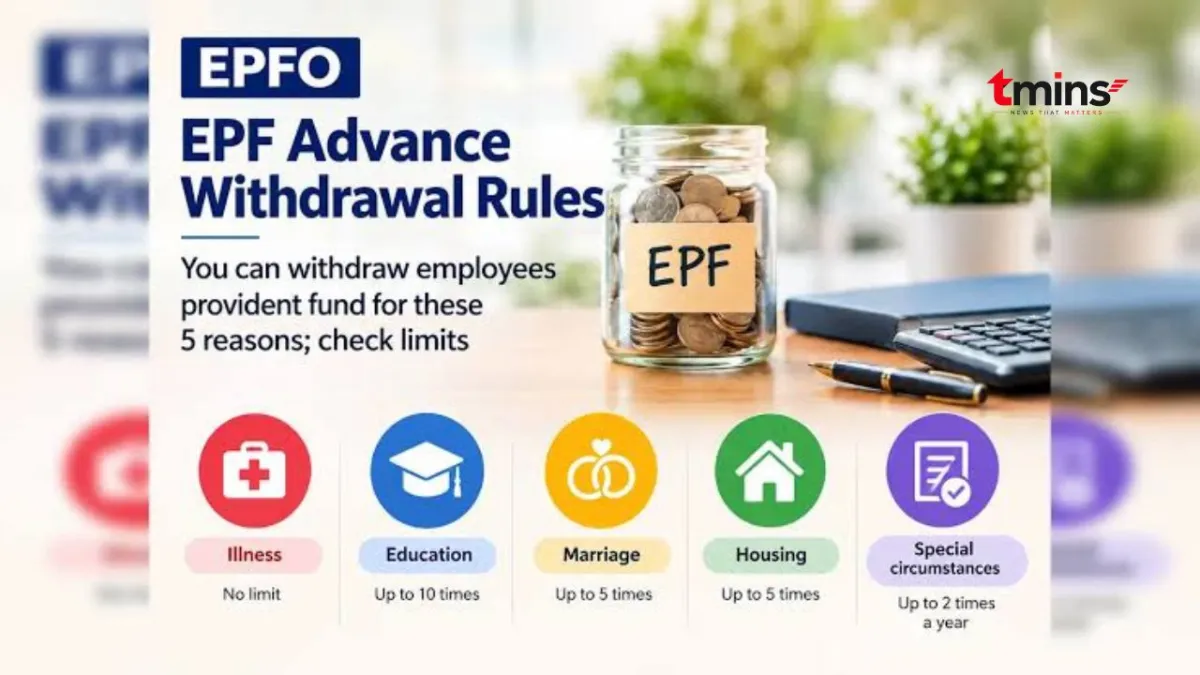
EPFO PF Withdrawal Rules 2026: If you have ₹1 lakh in your Provident Fund (PF) account, you may be able to withdraw up to ₹75,000 under the applicable withdrawal provisions, depending on your eligibility and the reason for withdrawal. The revised framework aims to make partial withdrawals simpler while ensuring that employees retain savings for retirement. The Employees’ Provident Fund Organisation (EPFO) simplified its partial withdrawal framework in October 2025 by merging 13 complex provisions into three broad categories: essential needs, housing needs and special circumstances. The government also announced a uniform minimum service requirement of 12 months for partial withdrawals.

PF Balance of ₹1 Lakh: How Much Can You Withdraw?
Under the general 75% withdrawal limit, the calculation for a PF balance of ₹1 lakh would be:
PF Account Balance | Up to 75% Withdrawal | 25% Retained |
|---|---|---|
₹1,00,000 | ₹75,000 | ₹25,000 |
₹1,00,000 | ₹50,000 withdrawn | ₹50,000 remaining |
₹1,00,000 | ₹25,000 withdrawn | ₹75,000 remaining |
If you qualify for the maximum 75% withdrawal, you could receive ₹75,000 and retain ₹25,000 in your account. However, this is an illustrative calculation, not a guarantee that every member can withdraw the same amount. The permitted withdrawal depends on the applicable category, eligibility conditions and EPFO provisions. The rules also provide for full withdrawal in certain special situations, so the 75% limit should not be treated as a universal limit for every type of claim.
Why Must 25% of the PF Balance Be Retained?
The revised framework seeks to balance employees’ immediate financial needs with long-term retirement security. According to the Ministry of Labour and Employment, repeated withdrawals can leave members with inadequate savings when they retire. Under the announced framework, 25% of contributions must be retained as a minimum balance in the applicable circumstances. This helps preserve a retirement corpus and allows the retained amount to continue earning interest, subject to EPFO rules. For someone with ₹1 lakh in their PF account, retaining ₹25,000 can help maintain a financial cushion for the future. Employees should therefore consider their long-term needs before making a withdrawal.
For Which Purposes Can You Withdraw PF Money?
The simplified withdrawal framework groups eligible needs into three categories.
1. Essential needs: These include medical treatment, education and marriage. The revised provisions make withdrawals for these needs more flexible. Education withdrawals are permitted up to 10 times and marriage withdrawals up to five times under the announced framework. Applicable conditions and limits still need to be met.
2. Housing needs: Eligible housing-related purposes include buying a house or plot, constructing a home, repaying a home loan and carrying out certain repairs or improvements. The amount available depends on the relevant provisions and the member’s eligibility.
3. Special circumstances: Simplified provisions cover certain unexpected situations. For example, a member may apply under the applicable special-circumstances category without specifying a reason, as announced in the revised framework.
Even if your reason qualifies, you should check the specific conditions before estimating the amount you can receive.
What Are the PF Withdrawal Rules During Unemployment?
Unemployment is an important exception to understand under the EPFO PF Withdrawal Rules 2026. According to the government’s clarification, an unemployed member can withdraw 75% of the PF balance immediately. The remaining 25% may be withdrawn after one year, subject to the applicable rules. Full withdrawal is also allowed in specified situations, including retirement after attaining the prescribed age, permanent disability, incapacity to work, retrenchment, voluntary retirement or permanent departure from India. Members should verify which provision applies to their circumstances before submitting a final settlement claim.
What Should Members Check Before Applying?
Before submitting a PF withdrawal claim, check your latest PF balance, employment and service details, and the category under which you intend to apply. Make sure your UAN and relevant account details are correct, and review the latest instructions available through official EPFO channels. The bottom line: Under the general 75% withdrawal calculation, a ₹1 lakh PF balance could mean up to ₹75,000 withdrawn and ₹25,000 retained. However, the exact amount depends on your eligibility and the type of claim. Checking the applicable rules before applying can help you avoid confusion and protect your long-term retirement savings.



टिप्पणी लिखें
बातचीत में शामिल होने के लिए कृपया साइन इन करें।
टिप्पणी करने के लिए साइन इन करेंखाता नहीं है? साइन अप करें