मुख्य बिंदु
- Supreme Court Green Crackers: 3-Hour Diwali Window पर विस्तृत जानकारी और ताज़ा अपडेट।
- सरकारी अधिकारियों और ज़मीनी संवाददाताओं के मुख्य बयान।
- ऐतिहासिक संदर्भ और बाज़ार/सामाजिक प्रभाव का विश्लेषण।
- नीचे पूरा विस्तृत विवरण पढ़ें।
Supreme Court Green Crackers: 3-Hour Diwali Window in Delhi-NCR on November 7-8
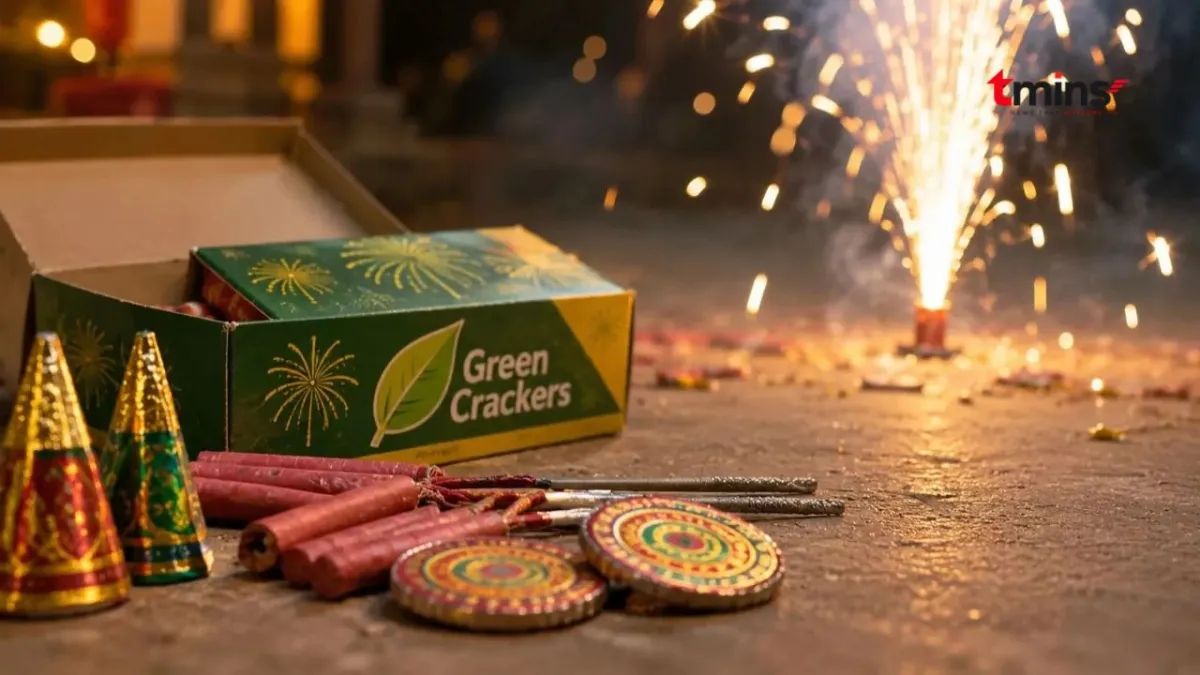
The Supreme Court Green Crackers ruling has brought temporary relief for Diwali celebrations in Delhi-NCR, allowing the sale and bursting of certified green firecrackers under strict conditions. The Supreme Court on Monday permitted people to burst green crackers between 6am and 7am and again from 8pm to 10pm on November 7 and 8. The relaxation will remain temporary, with a complete ban on firecrackers returning from November 9. A bench of Justices MM Sundresh and PB Varale said it had opted for a regulated approach instead of continuing a blanket prohibition. The court observed that the earlier ban had neither significantly improved air quality nor effectively prevented the illegal sale and use of conventional firecrackers. The bench noted that conventional crackers were repeatedly sold under the guise of green firecrackers, raising concerns about the enforcement of existing restrictions. It said there was insufficient scientific data to determine whether a complete ban was the most effective way to address pollution caused by fireworks. The court stressed that the problem required better implementation, coordination among authorities and sustained monitoring beyond the festive season.
Why the Supreme Court Allowed Green Crackers
The bench observed that the complete ban had contributed to the growth of an illegal market for conventional firecrackers while preventing consumers from purchasing legitimate, tested green crackers. The court also considered the constitutional balance between religious freedom and environmental protection. It said Article 25, which guarantees the freedom of religion, remains subject to public order, morality, health and other fundamental rights, including Article 21's right to life and a healthy environment. Acknowledging Diwali's religious, social and emotional significance, the court said celebrations must not come at the cost of public health. It noted that pollution caused by firecrackers affects people and other living beings, undermining the purpose of festivities.
Rules for Manufacturing and Selling Green Crackers
Under the Supreme Court's directions, manufacturers holding valid certifications from CSIR-NEERI and the Petroleum and Explosives Safety Organisation (PESO) can manufacture approved green crackers from November 2 to 6. Only products listed on the CSIR-NEERI website can be manufactured and sold. Their packaging must remain sealed to prevent conventional crackers from being mixed with approved products. Sales will be permitted only at designated locations identified by district collectors and commissioners in consultation with district police chiefs. Online sales have been prohibited. Traders whose licences were cancelled will receive temporary restoration from November 4 to 6 to facilitate sales. Any violation of the court's conditions will lead to immediate cancellation. QR codes have been made mandatory on every box to help consumers verify genuine green crackers. Scanning them must reveal the manufacturer's details, NEERI registration, PESO or district magistrate's licence, formulation and test certificate. The court has prohibited joined firecrackers, commonly known as laris, crackers containing barium and products not approved by CSIR-NEERI. Authorities have been directed to confiscate illegal crackers and initiate prosecution against violators.
No-Cracker Zones and Pollution Monitoring
The permitted bursting hours will not apply within 300 metres of hospitals, nursing homes, health centres, old-age homes, educational institutions and notified silence zones. These areas will be declared no-cracker zones and marked clearly. Police and district administration teams will inspect designated sale points, verify QR codes and check vehicles entering Delhi-NCR to prevent the movement of illegal firecrackers. The Supreme Court has also directed pollution-control authorities to collect detailed environmental and health data. CPCB, in consultation with state pollution-control boards, will prepare daily air-quality reports for November 2-6, November 7-8 and November 9-30. Authorities will also collect sand and water samples for comparative analysis, inspect non-functional air-quality monitoring stations and gather hospital data on pollution-related admissions and deaths. State governments must submit affidavits detailing compliance and the health impact of firecracker use by December 14. The court warned that officials responsible for non-compliance could face contempt proceedings.
Previous Orders and Background
The latest decision follows the Supreme Court's October 2025 order permitting green crackers for three days, from October 18 to 20, as a temporary relaxation. Before that, a complete ban had been imposed across Delhi-NCR in December 2024. The court observed that authorities had failed to comply fully with previous directions and had not submitted adequate information to assess the environmental impact of the relaxation. It also noted that air quality had deteriorated sharply around Dussehra despite the reinstatement of the ban. The proceedings originated from a 2015 petition filed on behalf of three minors, including Arjun Gopal, seeking restrictions on firecrackers because of their harmful effects on children and vulnerable groups. Rejecting the renewed plea for a complete prohibition at this stage, the bench clarified that the temporary relaxation was not an endorsement of unrestricted firecracker use. Instead, it aims to allow access to legitimate, tested products while generating scientific evidence on their environmental and health effects. The court emphasised the precautionary principle and called for greater public awareness about pollution-free celebrations. It also appealed to celebrities, sportspersons and members of the Bar to participate in awareness campaigns. The matter has been listed for further compliance on December 16.



टिप्पणी लिखें
बातचीत में शामिल होने के लिए कृपया साइन इन करें।
टिप्पणी करने के लिए साइन इन करेंखाता नहीं है? साइन अप करें