
मुख्य बिंदु
- Dharmendra Pradhan: Rise, Leadership and Resignation पर विस्तृत जानकारी और ताज़ा अपडेट।
- सरकारी अधिकारियों और ज़मीनी संवाददाताओं के मुख्य बयान।
- ऐतिहासिक संदर्भ और बाज़ार/सामाजिक प्रभाव का विश्लेषण।
- नीचे पूरा विस्तृत विवरण पढ़ें।
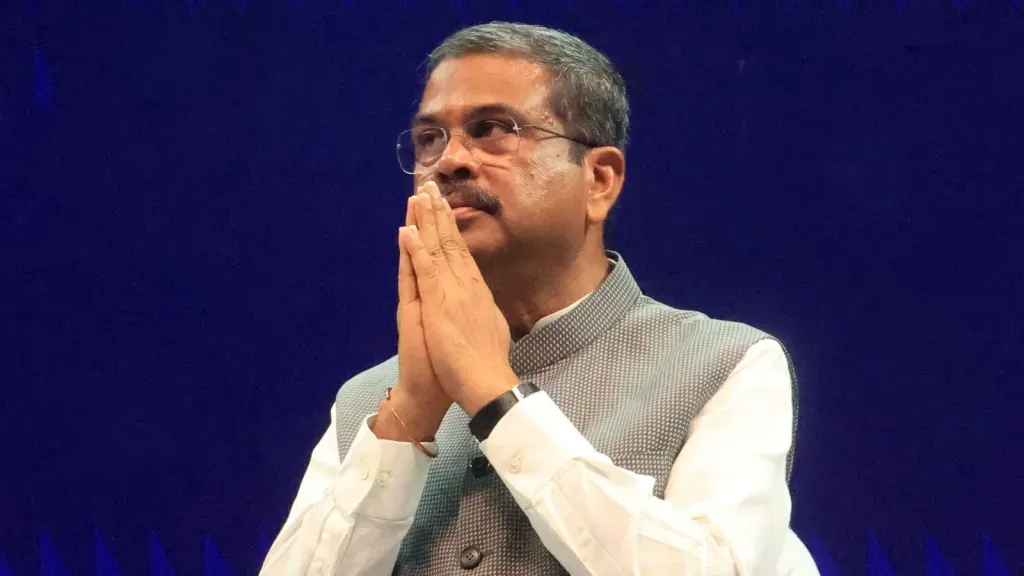
Dharmendra Pradhan (57), who resigned amid mounting pressure over the NEET paper leak controversy, had established himself as one of the Bharatiya Janata Party’s (BJP) most influential and enduring leaders at the national level. Known for his organisational skills, political management, and close association with the party's top leadership, Pradhan became one of the most prominent political figures from Odisha to gain nationwide recognition.
Born on June 26, 1969, into a politically active family, Pradhan was introduced to public life at an early age through the socio-cultural activities of the Rashtriya Swayamsevak Sangh (RSS). His father, Dr. Debendra Pradhan, was a respected BJP leader from Odisha and later served as a Union Minister in the Atal Bihari Vajpayee government.
Pradhan began his political journey as an activist of the Akhil Bharatiya Vidyarthi Parishad (ABVP) while studying at Talcher College. He rose steadily through the organisation, becoming president of the college students' union in 1985, state secretary of the ABVP in 1993, and national secretary in 1995. He later completed a master’s degree in Anthropology from Utkal University, Bhubaneswar. Although he contested the student union election in 1990, he was defeated by Arun Sahoo, who later became a senior leader in the Biju Janata Dal (BJD).
Following in his father’s footsteps, Pradhan formally joined the BJP in 1998. In 2000, he was elected as an MLA from the Pallahara constituency during the BJD-BJP coalition government in Odisha. His performance as a legislator earned him the prestigious Utkalmani Gopabandhu Pratibha Sanman, recognising him as the best legislator of the Odisha Assembly.
His rise within the BJP organisation continued rapidly. He became president of the party’s youth wing in Odisha in 2001, national secretary in 2002, and national president of the Bharatiya Janata Yuva Morcha (BJYM) in 2004.
The same year marked his entry into Parliament when he was elected to the Lok Sabha from the Deogarh constituency. His growing influence within the BJP’s national structure led to his election to the Rajya Sabha from Bihar in 2012. After Narendra Modi became Prime Minister in 2014, Pradhan was appointed Union Minister for Petroleum and Natural Gas. During his tenure, he played a key role in implementing major initiatives such as the Pradhan Mantri Ujjwala Yojana, which aimed to expand LPG access across India.
As the BJP expanded its political footprint nationwide, Pradhan emerged as the party’s leading face in Odisha. His close relationship with the central leadership strengthened his position, leading to a second Rajya Sabha term from Madhya Pradesh in 2018 and a continued place in the Union Cabinet during Modi’s second term.
In 2021, Pradhan was entrusted with the Ministry of Education, a portfolio he continued to hold in the NDA government’s third term. Returning to direct electoral politics after a gap of 15 years, he contested and won the 2024 Lok Sabha election from Sambalpur with a significant mandate.
Pradhan is widely credited with building the BJP’s organisational structure in Odisha. At a time when the party had limited presence in the state, he travelled extensively, recruited grassroots leaders, and strengthened the BJP’s network. His organisational strategies contributed significantly to the party’s strong performance in the 2017 panchayat elections, the 2019 Lok Sabha elections, and ultimately the BJP’s historic victory in Odisha in 2024, which ended the BJD’s long rule.
Within the BJP, Pradhan earned a reputation as a meticulous planner and effective political strategist. He worked closely with senior leaders including Amit Shah and was considered part of the party’s core decision-making structure. Rather than relying on mass charisma, his influence stemmed from organisational competence, strategic thinking, and political reliability.
However, his tenure as Education Minister ultimately became the most challenging phase of his career. While he strongly advocated the National Education Policy (NEP), multilingual education, and initiatives such as PM-SHRI schools, the ministry also faced increasing criticism over examination management and implementation challenges.
The most serious challenge emerged from controversies surrounding national examinations. Allegations of paper leaks, exam cancellations, irregularities in recruitment tests, and concerns regarding the functioning of the National Testing Agency (NTA) led to growing public dissatisfaction. The NEET paper leak controversy, in particular, triggered nationwide protests and intense political pressure.
Despite his long record as an organiser and administrator, the examination crisis overshadowed many of his achievements in the education sector. Facing mounting criticism and public outrage, Dharmendra Pradhan eventually resigned, bringing an end to one of the most significant chapters of his political career.



टिप्पणी लिखें
बातचीत में शामिल होने के लिए कृपया साइन इन करें।
टिप्पणी करने के लिए साइन इन करेंखाता नहीं है? साइन अप करें