Repo Rate: RBI May Raise Interest Rates Again as Inflation Risks Grow
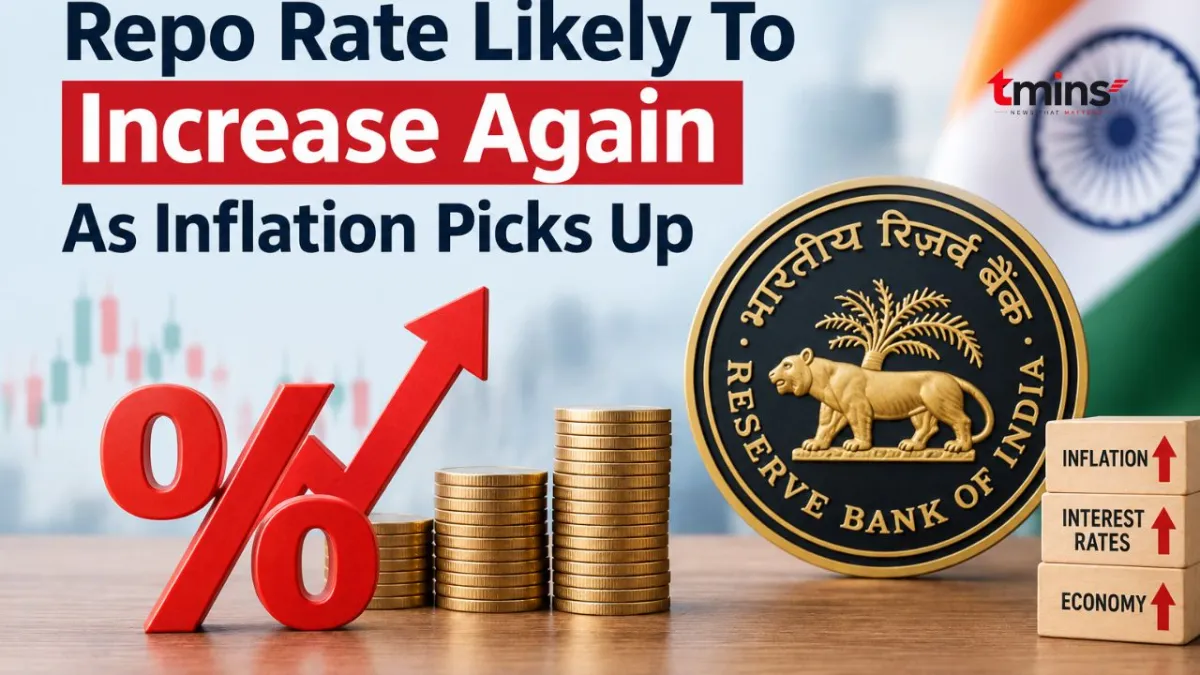
A number of economists think India’s repo rate may rise again soon. They point to inflation pressures that seem to be spreading across more areas now. Several large firms expect the RBI to raise rates by 25 basis points at its next meeting on December 4. Some of the same analysts also look for more tightening in the early part of 2027. In their view, the policy rate could reach about 6.25%. That would be up from the current level of 5.5%. If that happens, India’s main policy rate would sit on the higher side compared with many countries in Asia. The picture has changed from earlier months. Not long ago, the RBI was cutting rates. More rate hike calls grew after the central bank raised rates for the first time in nearly four years. It also moved its stance to “calibrated tightening.”
Economists say the repo rate could rise again
A number of banks, including Goldman Sachs, Standard Chartered, Deutsche Bank, and Morgan Stanley, expect a further 25 basis point move in December. Goldman Sachs economist Santanu Sengupta noted a change in the RBI’s message since August. He thinks rates could still go up by at least 75 basis points. His view is based on steady economic activity, wider price stress, and the risk that food costs may rise more later, tied to El Niño in 2027. These calls also point to the idea that authorities may need to hold policy tight for a longer period. That could happen if inflation keeps showing up in more areas of the economy.
Prices for food and energy are drawing fresh worries
The main issue with the planned rate increases is that inflation may not cool fast enough. Higher energy costs are one driver. Tension in the Middle East has been linked to oil prices rising. That can spill over into costs at home. Food prices are at risk too. If the monsoon turns weaker, crops may not do as well. That usually means higher prices. India also relies on imported crude oil, so changes in global oil costs can hit the local economy. The rupee is also being watched closely. It has been near a new low of 96.76 to the US dollar. If the currency stays weak and oil stays high, prices here could rise further. New RBI survey results have added pressure. Many households say they expect prices to move up faster in the next few months.RBI Has Space Backed by Solid Growth
Even with inflation still a worry, India’s growth picture looks firm. The economy grew 7.8% from April to June. That was above what the RBI had expected earlier. RBI Governor Sanjay Malhotra said the bank is trying to keep things steady. He also pointed to how the RBI views the rupee. In his view, the goal is to avoid wild swings in the currency. The aim is not to reach one fixed exchange-rate number. Upasana Chachra, the top India economist at Morgan Stanley, sees support for more rate hikes. She links the strong growth with inflation pressures that are getting bigger. She argues that extra hikes could curb second-round price pressures. They may also help keep inflation expectations in check. And they can support stability for the country’s external position. Samiran Chakraborty at Citigroup has raised his view of a full tightening move of 75 basis points.RBI signals room to adjust future rate moves
Not every analyst thinks the RBI will push through many hikes in a row. The RBI said the size and length of any future increases will hinge on what happens to inflation and to overall growth. Malhotra called the RBI’s stance “calibrated tightening.” He said this is a softer form of tightening, not a promise of a fixed set of rate changes. HSBC economist Pranjul Bhandari expects a hike in December. After that, she thinks the RBI may shift into a longer pause. In her view, the RBI can choose at each meeting whether to lift rates or keep them steady. The RBI’s 2018 record is often cited here. That year, the central bank also used a calibrated tightening approach, but it did not keep raising rates forever. Barclays and ICRA economists share a similar view. They do not see a quick streak of hikes after December. Borrowers, firms, and investors will keep a close eye on the Repo Rate. If inflation keeps moving up, tighter policy could mean higher borrowing costs. If price pressures ease, the RBI may have more leeway to stop and wait.




टिप्पणी लिखें
बातचीत में शामिल होने के लिए कृपया साइन इन करें।
टिप्पणी करने के लिए साइन इन करेंखाता नहीं है? साइन अप करें