
मुख्य बिंदु
- History of Freedom Fighters: The Heroes Who Fought for India’s Independence पर विस्तृत जानकारी और ताज़ा अपडेट।
- सरकारी अधिकारियों और ज़मीनी संवाददाताओं के मुख्य बयान।
- ऐतिहासिक संदर्भ और बाज़ार/सामाजिक प्रभाव का विश्लेषण।
- नीचे पूरा विस्तृत विवरण पढ़ें।
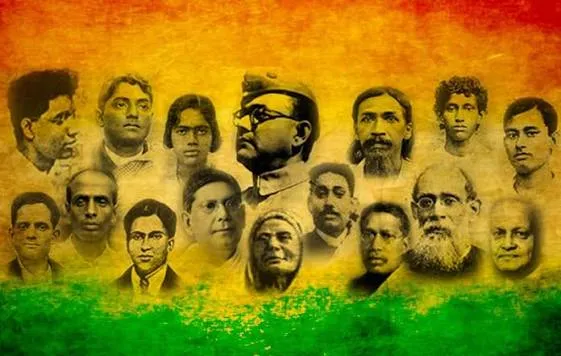
History of Freedom Fighters: India’s independence was the result of a long and determined struggle against British colonial rule. For decades, countless freedom fighters challenged British authority through protests, revolutionary activities, non-violent movements and political campaigns. Their courage, sacrifices and dedication played a crucial role in India becoming an independent nation on August 15, 1947.
The freedom movement was not led by a single person or organisation. It involved people from different regions, communities and backgrounds who shared the dream of a free India.
Early Resistance Against British Rule
Resistance to British expansion began long before the organised national movement. Several rulers, soldiers and local communities fought against the growing influence of the East India Company.
Among the notable early figures was Rani Lakshmibai of Jhansi, who became one of the most recognised symbols of resistance during the Revolt of 1857. Leaders such as Mangal Pandey, Tatya Tope, Nana Sahib and Kunwar Singh also played important roles in the uprising.
Although the revolt was eventually suppressed, it became an important chapter in India's struggle against colonial rule.
Mahatma Gandhi and Non-Violent Resistance
Mahatma Gandhi transformed India's freedom movement by promoting non-violence and mass participation. After returning to India from South Africa in 1915, Gandhi became one of the central figures of the national movement.
He led several major campaigns against British rule, including the Non-Cooperation Movement, Civil Disobedience Movement and Quit India Movement.
Gandhi's philosophy encouraged ordinary Indians to participate in the struggle through peaceful protests, boycotts and civil disobedience.
Bhagat Singh and the Revolutionary Movement
Bhagat Singh remains one of India's most admired revolutionary freedom fighters. He became a symbol of courage and patriotism among India's youth.
Along with Rajguru and Sukhdev, Bhagat Singh was involved in revolutionary activities against British rule. He was executed by the British government in 1931 at the age of 23.
His sacrifice and writings continue to inspire generations of Indians.
Subhas Chandra Bose and the Indian National Army
Subhas Chandra Bose, popularly known as Netaji, followed a different approach to India's independence. He believed that armed struggle could play an important role in ending British rule.
He reorganised the Indian National Army (INA) and sought international support for India's freedom. His famous slogan, “Give me blood, and I will give you freedom,” became a powerful call to action.
The INA's activities and the trials of its soldiers generated significant public sympathy in India.
Sardar Vallabhbhai Patel
Sardar Vallabhbhai Patel was another major figure in the freedom movement. He played an important role in the Kheda and Bardoli movements and became one of the strongest organisers within the Indian National Congress.
Known as the “Iron Man of India,” Patel later played a crucial role in integrating India's princely states after independence.
Jawaharlal Nehru
Jawaharlal Nehru was a prominent leader of India's independence movement and a close associate of Mahatma Gandhi.
He participated in several nationalist movements and spent years in British prisons. Nehru later became independent India's first Prime Minister and delivered the historic “Tryst with Destiny” speech on the eve of independence.
Sarojini Naidu
Sarojini Naidu, known as the “Nightingale of India,” was an important leader in the national movement and an advocate for women's participation in India's freedom struggle.
She participated in the Non-Cooperation Movement and Civil Disobedience Movement and was also involved in the Salt Satyagraha. Her leadership helped encourage more women to take an active role in the national movement.
Women Freedom Fighters
Women made significant contributions to India's independence struggle. Apart from Rani Lakshmibai and Sarojini Naidu, figures such as Aruna Asaf Ali, Kasturba Gandhi, Annie Besant and Madam Bhikaji Cama played important roles in the broader nationalist movement.
Their participation challenged social restrictions and demonstrated that India's freedom struggle involved people from diverse backgrounds.
The Quit India Movement
The Quit India Movement, launched in 1942, became one of the most significant mass movements against British rule. Gandhi gave the famous call of “Do or Die”, urging Indians to demand an end to colonial rule.
Thousands of people were arrested, while underground networks continued the movement in several parts of the country.
The movement demonstrated the widespread determination of Indians to achieve independence.
The Final Road to Independence
The Second World War weakened Britain's economic and political position. After the war, pressure for Indian independence increased significantly.
Political negotiations eventually led to the Indian Independence Act of 1947. India became independent on August 15, 1947, although independence also came with the Partition of British India and the creation of India and Pakistan.
Remembering the Freedom Fighters
India remembers its freedom fighters through national celebrations, memorials, museums, books and educational programmes. Independence Day on August 15 provides an opportunity to honour those who sacrificed their lives and freedom for the country.
Their stories also remind citizens that India's independence was built through years of struggle, unity, courage and sacrifice.
Conclusion
The history of India's freedom fighters is a story of extraordinary courage and determination. From the heroes of the Revolt of 1857 to Gandhi's non-violent movements and the sacrifices of revolutionaries such as Bhagat Singh, India's independence struggle involved countless individuals.
Their contributions created the foundation for an independent India. Remembering their sacrifices is not only a way of honouring the past but also a reminder of the responsibilities that come with freedom.




टिप्पणी लिखें
बातचीत में शामिल होने के लिए कृपया साइन इन करें।
टिप्पणी करने के लिए साइन इन करेंखाता नहीं है? साइन अप करें